At some point in the last few years, most health-conscious people went through their kitchen and
made decisions. Swapped out the cooking oil. Started reading ingredient lists. Stopped buying things
with twelve-syllable preservatives in them. The process is different for everyone but the instinct
is the same: if you wouldn't feed it to someone you care about, stop feeding it to yourself.
Somewhere in that process, the sports drink survived. It always survives. It has the word
"sport" in
the name and an athlete on the label and it sits in the healthy section at the checkout. Nobody
audits it the way they audit everything else.
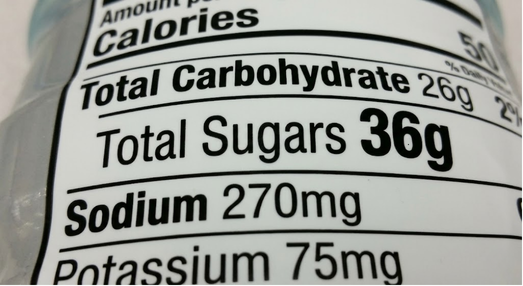
The label on a standard sports drink lists sugar as the second ingredient. 36 grams of it per
bottle. After that comes the dye, which is there because someone in marketing decided the drink
needed a color, and the color needed to be one that doesn't exist in nature. The electrolyte count
at the bottom of the panel is 270mg sodium and 75mg potassium. That's the number the entire product
is supposedly built around. It's less than what you'd get from eating a piece of fruit.
Sugar and electrolyte figures based on published Nutrition Facts panels. Standard sports drink leading market brand.
The disconnect isn't hard to understand once you know the history. These drinks were formulated in
the mid-1960s for college football players doing two-a-days in Florida heat. The brief was simple:
replace what players sweated out fast enough to keep them on the field. Sugar was the delivery
mechanism. The formula worked for that specific context and then got marketed to everyone else for
the next sixty years without meaningful revision.
The person buying one before a Tuesday morning workout is not a Division I lineman in August.
The
product doesn't know that.
Sel gris is a grey sea salt raked by hand from clay-lined marshes on the Brittany coast. It looks
nothing like table salt. Darker, coarser, faintly damp, because the Atlantic minerals that came with
it never got processed out. Chefs who care about what salt does to food have been using it for
decades. The clay filtration that gives it the color also gives it 80 trace minerals that refined
sodium chloride lost somewhere between the ocean and the factory.
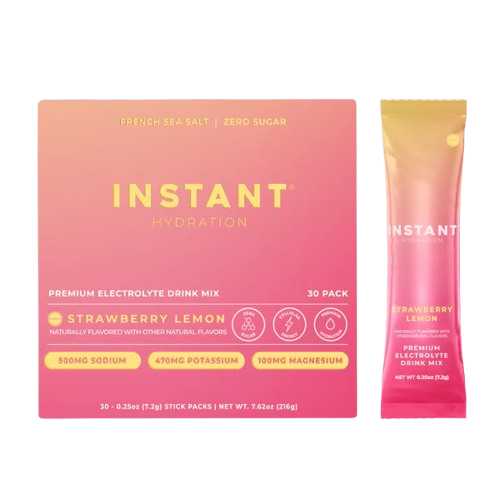
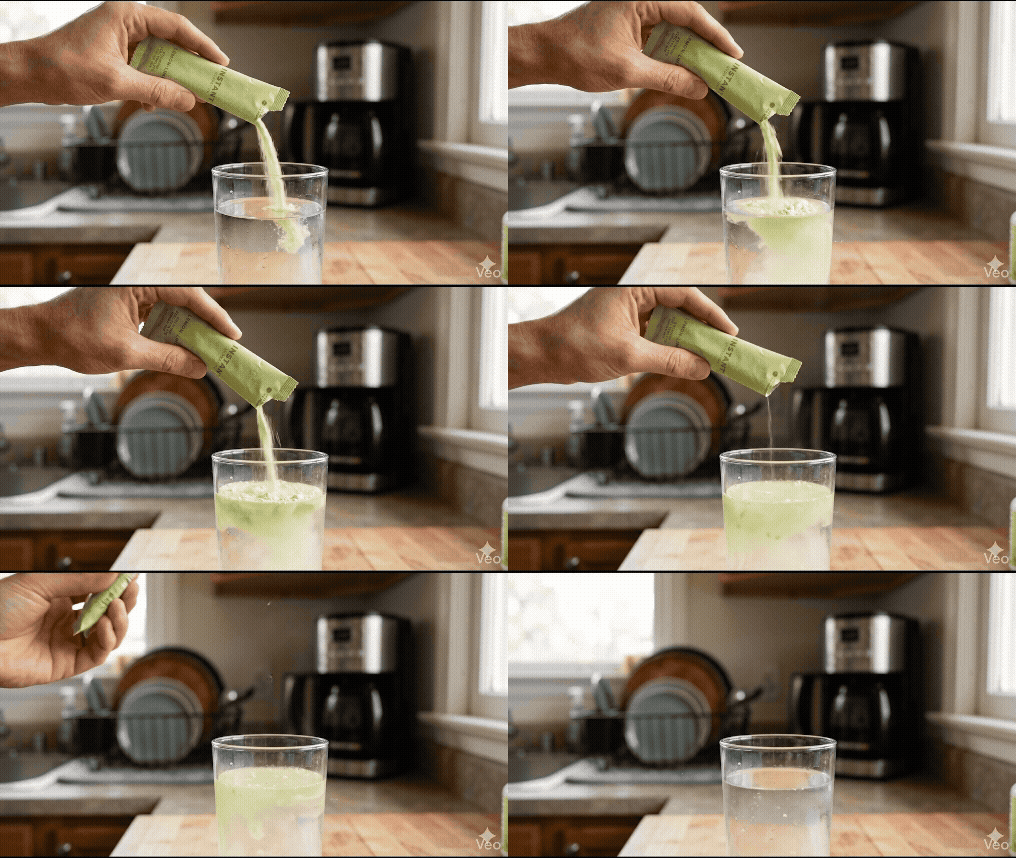
Instant Hydration is built around that salt. 1,220mg of electrolytes per serving. 470mg
potassium.
100mg magnesium. 10 calories. Zero sugar. Zero dye. The earthiness in the taste is the minerals.
That's what mineral-complete hydration tastes like when nothing is covering it up with citric acid
and high-fructose corn syrup.
I've been using it before morning runs for three months. The first thing I noticed was the
taste,
which sounds minor until you realize the taste of every sports drink you've ever had was mostly
sugar and flavoring layered over something industrial underneath. The second thing I noticed was
that my body felt actually hydrated in a way I'd stopped expecting from anything I drank that wasn't
plain water.
The label audit you ran on everything else in your diet. This is just the last item on the list.
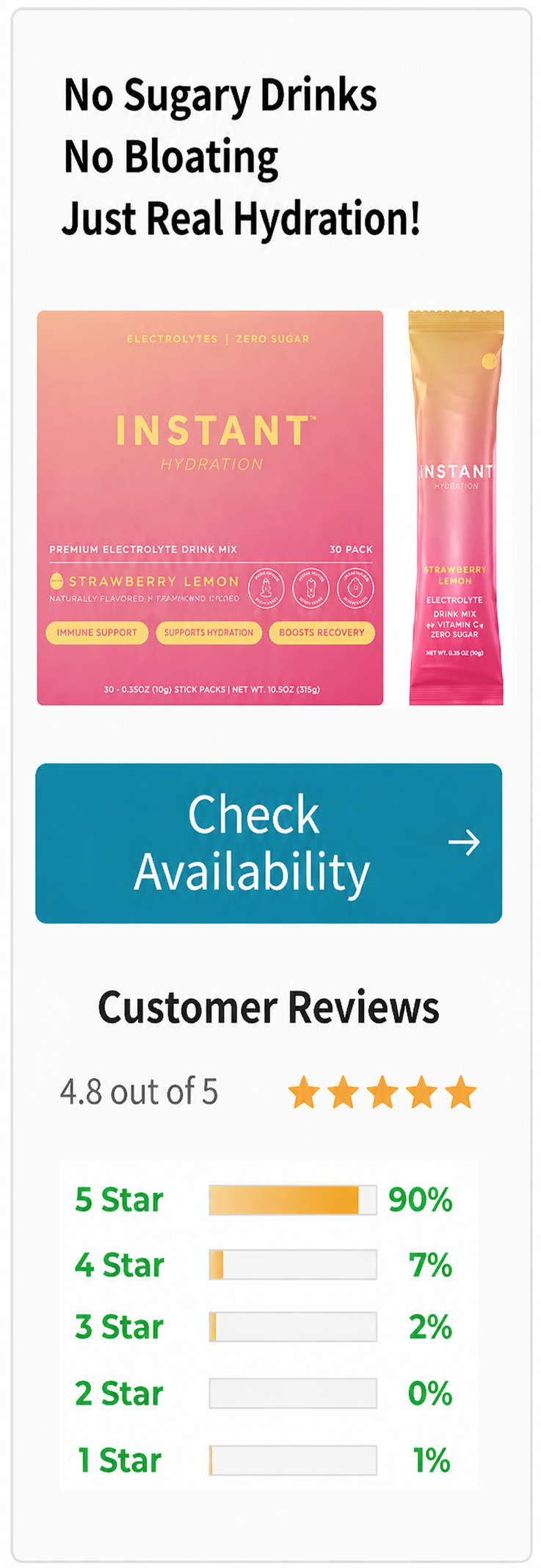
Zero sugar. 1,220mg electrolytes. Free shipping. 50-day money-back guarantee. If you don't feel the difference within a week, return it!